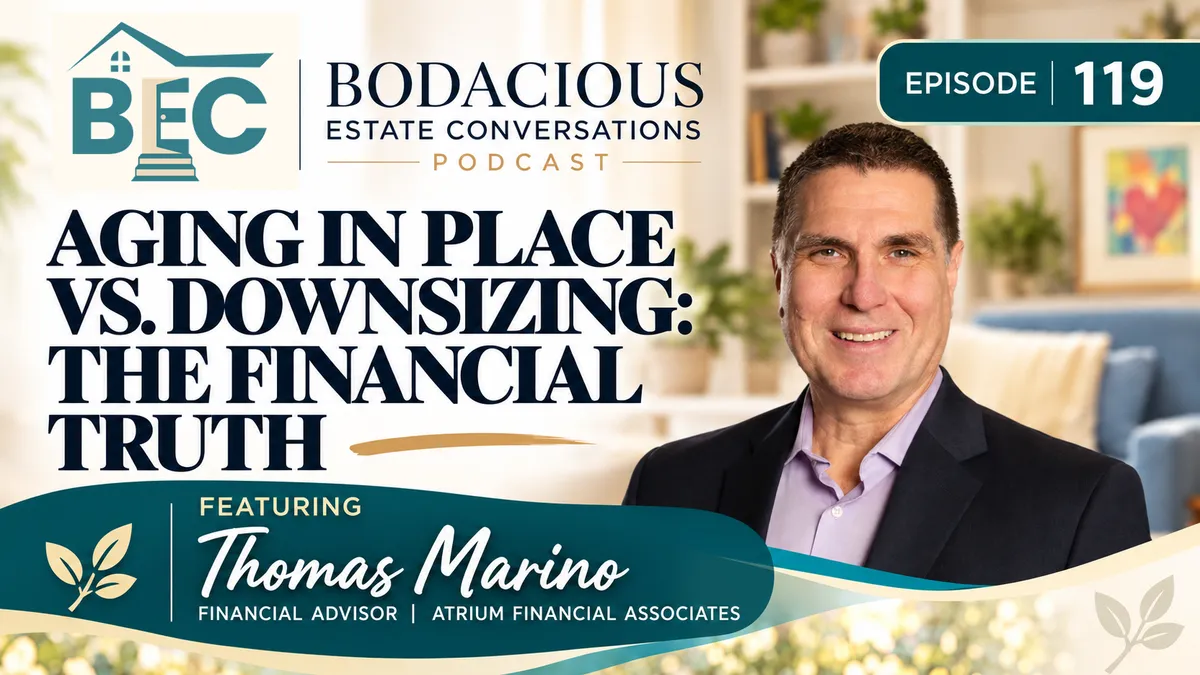
Aging in Place vs. Downsizing: Financial Questions to Ask Before You Decide
Bodacious Estate Conversations | Episode 119
Featuring Thomas Marino, Account Executive at Goosehead Insurance
Deciding whether to stay in a longtime home or move somewhere smaller can involve more than a sale price or monthly budget. A home may hold memories and provide a sense of independence, but its stairs, upkeep, location, and future care needs can shape whether it remains practical over time.
In Episode 119 of Bodacious Estate Conversations, host Kasey King speaks with Thomas Marino, a Financial Advisor at Atrium Financial Associates, about the financial and personal questions families can consider when weighing aging in place against downsizing. Their conversation centers on planning ahead: looking at the whole picture before a health change or other urgent event makes choices harder.
Plan for a long retirement, not just today’s expenses
Marino describes a “longevity run rate” as a way to think about how retirement resources may need to support a person over time. The idea is to consider both how long retirement could last and how a household will fund expenses throughout it.
That planning can feel different from saving during working years. In retirement, people may need to decide how to draw on savings, income, insurance, and other assets while accounting for changing needs. A home may be one of a household’s largest assets, but its value alone does not show whether staying is financially workable.
A practical starting point is to list regular housing costs and likely future expenses. Include upkeep, repairs, utilities, property-related costs, accessibility changes, and any help needed with household tasks. Then compare those costs with the resources available to pay them over time.
Assess whether the home can support changing needs
A house that works well now may become more difficult to live in if mobility or care needs change. Marino recommends thinking ahead about whether the home could support an older resident, including access between floors, safe entryways, and the ability to manage everyday tasks.
Walk through the home with future use in mind. Are there stairs between the bedroom and bathroom? Could someone enter safely if they used a mobility aid? Would cooking, bathing, or getting outside become difficult? Are there modifications or services that could help, and what might they cost?
Maintenance also matters. Yard work, repairs, and routine chores may become harder to manage. Hiring help can make staying at home more feasible, but those services add to the household budget. Compare that total with the expenses of moving, including any new housing fees or homeowners association costs.
Compare care options and how they may be funded
Families may prefer care at home, but the plan should account for what support could actually be needed and how it would be paid for. Marino discusses several broad possibilities, including paying from available assets, borrowing against home equity, or exploring insurance-based care planning options.
Each approach has different eligibility rules, costs, risks, and tradeoffs. Marino cautions listeners to do careful research before considering reverse mortgages and suggests speaking with a trusted mortgage professional about borrowing options. He also discusses long-term care insurance and hybrid life insurance policies with care-related features, while noting that coverage and availability depend on a person’s circumstances.
The episode’s practical takeaway is to avoid assuming that a home-based option will automatically cost less or that a particular financial product is right for everyone. Review the choices with qualified professionals who can explain how they apply to your household.
Look beyond the house to the neighborhood
Where someone lives can affect daily independence as much as the home itself. Consider proximity to doctors, transportation, stores, friends, and family. A rural or car-dependent location may work well at one life stage but create challenges if driving becomes difficult.
Marino and King also discuss the value of social connection. Familiar neighbors or a community can provide support, but that support should not be assumed. Families can ask what transportation is available, whether it is practical to use, and how a move might affect relationships, routines, and community involvement.
These factors are personal. A financially attractive move may still feel wrong if it disrupts important connections; staying may feel comfortable but become isolating if transportation and support are limited. Include those considerations alongside the budget.
Start family conversations before a crisis
Marino encourages families to discuss finances, care preferences, and important documents before a health emergency narrows the available choices. Those conversations can help adult children understand a parent’s wishes and make it easier to coordinate with the right professionals.
Useful topics can include who should help make decisions, what kind of care a person would prefer, how housing costs will be covered, and where important documents are kept. Families can begin with one manageable step, such as reviewing a budget or identifying questions for an attorney or financial advisor.
Marino describes a short “longevity readiness” guide in the conversation, built around questions about preparation. The broader point is to identify what has—and has not—been addressed, then decide what to tackle next. Plans should also be revisited as health, finances, and family circumstances change.
Make the decision around the whole life plan
Aging in place and downsizing are not simply financial calculations. The decision can involve the home’s condition, the cost of support, access to transportation and care, social ties, and the household’s resources. What works for one person may not fit another.
Marino’s discussion offers a framework for taking the first step: review the home, estimate ongoing and future costs, consider the surrounding community, and have conversations while there is still time to explore options. Families who need help preparing or selling an unwanted property can start a conversation with Guided Home Prep. No pressure. Just clarity and a plan.
The information in this article is educational and reflects the episode conversation. It is not individualized financial, insurance, tax, legal, or medical advice. Consult qualified professionals about your circumstances.