After a Dementia Diagnosis: First Steps for Families
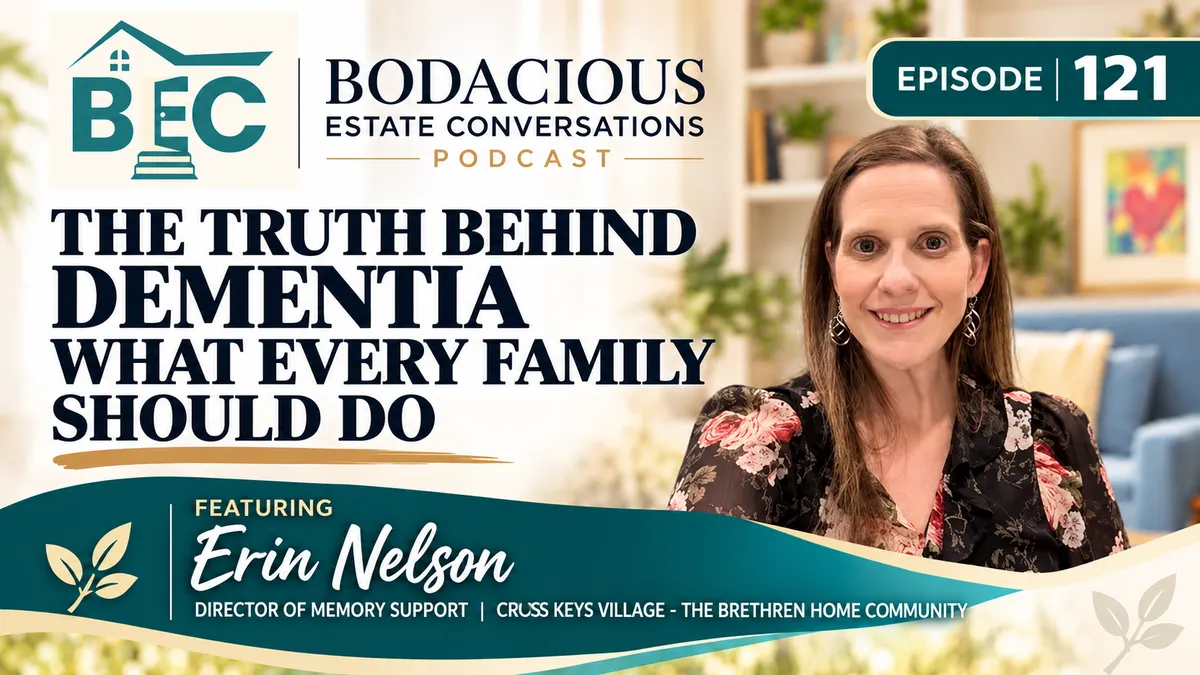
Bodacious Estate Conversations | Episode 121
Featuring Erin Nelson, Director of Memory Support at Cross Keys Village – The Brethren Home Community
A dementia diagnosis can leave an individual and their family with more questions than answers. What happens next? Where can they find reliable information? How can care partners prepare for changes while continuing to support the person they love?
In Episode 121 of Bodacious Estate Conversations, Erin Nelson, Director of Memory Support at Cross Keys Village – The Brethren Home Community, discusses how education, personal support, and early conversations can help families begin to navigate those questions.
Start with education and connection
Nelson says people often reach out soon after a diagnosis feeling frightened and unsure where to turn. A pamphlet or a short appointment may not be enough to help someone understand what the diagnosis means for their day-to-day life.
At Cross Keys Village, Nelson describes the Embracing Your Story education series, which includes two parts: Embracing You for people with a recent diagnosis and their care partners, and Embracing Us for people and care partners navigating later changes. The series is intended to give participants a place to learn, ask questions, and connect with others going through similar experiences.
Cross Keys Village says its memory support education and resources are open to people in the greater community at no cost. Program details and current schedules are available on the Embracing Your Story page. Cross Keys Village
Make room for questions
The conversation also highlights that care partners can be spouses, siblings, or other family members. Their questions and needs matter, too. Learning together may help families better understand the diagnosis and talk about the support they may need over time.
Nelson encourages families to begin important conversations while the person diagnosed can take part in decisions. Topics may include preferences for future care and what would help the person remain in their home or community as long as possible. Families can write down questions as they come up and bring them to a healthcare professional.
Memory changes can have more than one cause, and a screening is not the same as a diagnosis. The National Institute on Aging recommends discussing concerning changes with a doctor, who can assess possible causes and next steps. National Institute on Aging
Support can include the wider community
Nelson describes community connection as an important part of the support available at Cross Keys Village. In the interview, she talks about social activities, groups, and opportunities for people to stay engaged with others. She also explains that the community’s Lifespring Memory Support Resource Center serves people beyond Cross Keys Village residents.
The specific programs and schedules may change. Families interested in current support options can check Cross Keys Village’s memory support resources or contact the organization through its website.
A starting point for the first month
There is no single checklist that fits every family after a diagnosis. Nelson’s discussion points to a few useful places to begin: seek education early, ask questions of the person’s healthcare team, include care partners in learning, and talk about care preferences while the person can share them.
Most of all, a diagnosis does not mean a family has to figure everything out at once. As Nelson emphasizes in the episode, people facing memory changes and their care partners should know that support and community can be part of the journey.
Listen to Episode 121:
This article summarizes an interview and is for general information. It is not a substitute for evaluation or advice from a healthcare professional.