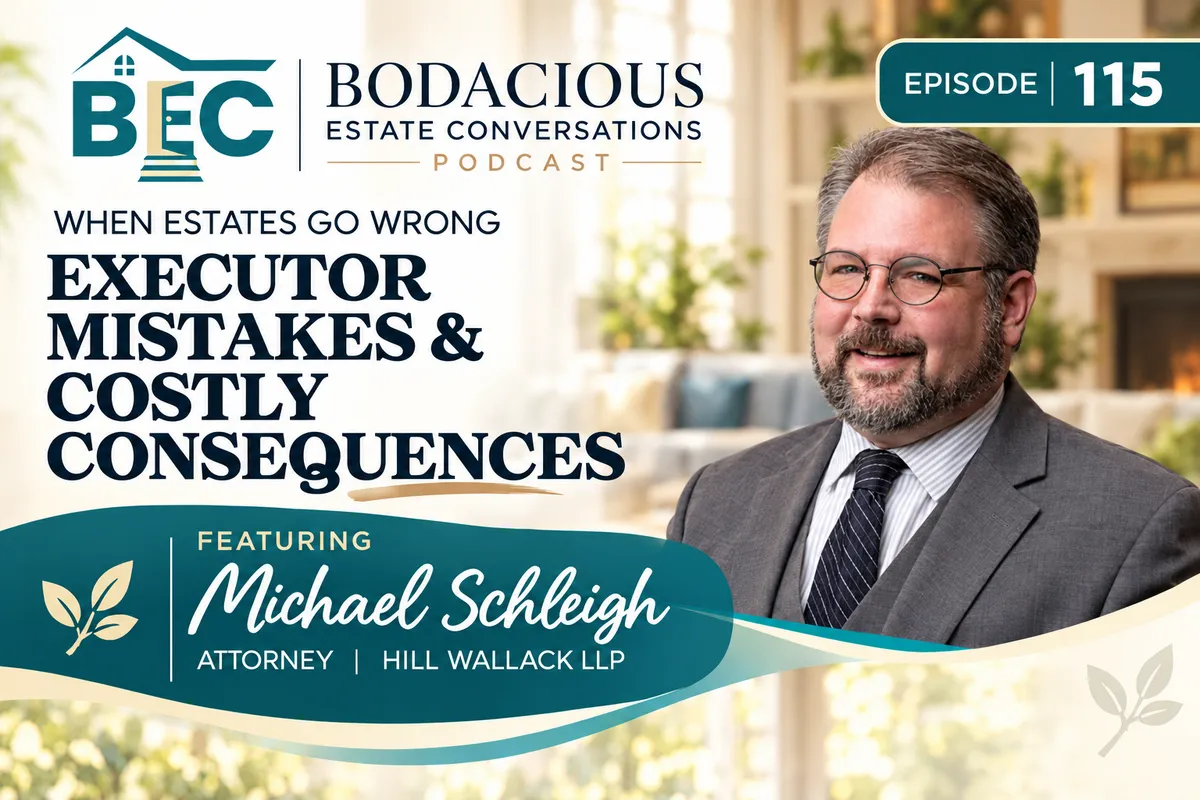
Executor Mistakes That Can Cost an Estate: Lessons from Michael Schleigh
Bodacious Estate Conversations | Episode 115
Featuring Michael Schleigh, Attorney | Hill Wallack LLP
Serving as an executor or estate administrator can mean managing property, identifying debts, communicating with beneficiaries, and following a will—all while grieving a loss. A small oversight can lead to delays, family conflict, or personal financial exposure for the person responsible for the estate.
In Episode 115 of Bodacious Estate Conversations, attorney Michael Schleigh of Hill Wallack LLP discusses common fiduciary mistakes and practical ways to approach estate administration with care. The conversation focuses on preserving assets, keeping clear records, understanding the limits of a fiduciary’s authority, and asking for qualified help when a situation becomes complicated.
Understand who the fiduciary serves
An executor or administrator has responsibilities to the estate and must follow applicable law and the governing documents. That can involve balancing the interests of creditors and beneficiaries while protecting estate property and carrying out valid instructions.
The role is not permission to treat estate assets as personal funds. Schleigh emphasizes keeping estate and personal finances separate and avoiding personal expenses or informal advances to beneficiaries. A beneficiary’s expected share may change after debts, expenses, and other obligations are determined. Distributing money too early can create problems if the estate later cannot meet its obligations.
Before making major decisions, identify what authority you have, what records you need to keep, and which decisions may require professional guidance. These duties and procedures can vary by jurisdiction.
Identify and preserve assets early
A careful first inventory helps the fiduciary understand what the estate owns and what needs attention. That may include real estate, vehicles, financial accounts, personal property, and items that are not immediately obvious. Schleigh notes that valuable property can be overlooked among household belongings, so appraisals or other qualified reviews may be useful before items are given away or discarded.
Property also needs protection while the estate is being administered. For a home, that can mean checking its condition, securing it, and reviewing insurance coverage. An existing policy may not address changes in occupancy or use, so the fiduciary should confirm coverage with the insurer or a qualified professional.
Keep a record of what was found, where it is held, who has access, and what steps were taken to protect it. For property that may be sold, transferred, or distributed, clear documentation can help explain later decisions.
Keep complete records and avoid conflicts of interest
Schleigh returns to a simple practice throughout the episode: document decisions and transactions. Save statements, receipts, correspondence, inventories, appraisals, and notes explaining why significant actions were taken. If the estate is later reviewed, a clear record can show how the fiduciary handled the assets and obligations.
The episode also highlights the risk of conflicts of interest. Schleigh describes choosing not to prepare a family member’s will when he stood to benefit under it and would also be responsible for administering the estate. That personal example illustrates why independent advice and transparent processes matter when a fiduciary may benefit from a decision.
When family members disagree, do not assume that an informal arrangement is enough. Follow the estate documents and local procedures, and get legal advice before making a decision that could affect someone’s share or rights.
Treat creditor claims and distributions carefully
An estate may have debts, secured claims, taxes, property expenses, and other obligations. The timing and order for handling these matters are governed by applicable law and the details of the estate. Schleigh advises against rushing distributions before the fiduciary understands the estate’s financial picture.
That does not mean every estate follows the same timeline. The right approach depends on local requirements, the assets and debts involved, and any court orders or deadlines. A fiduciary should get jurisdiction-specific guidance before deciding when to pay claims or distribute property.
The conversation also discusses life insurance and other assets that may pass outside probate. Whether a particular asset belongs to the estate depends on its ownership and beneficiary designation. Review the relevant documents rather than assuming that an asset named in a will is available to pay estate expenses.
Learn from a costly power of attorney case
Schleigh recounts a case involving a power of attorney who was unable to account adequately for how funds had been used for the benefit of the people she represented. After a court review, the fiduciary was ordered to repay $76,000. The case illustrates the serious consequences that can follow when someone entrusted with another person’s finances uses funds improperly or fails to keep reliable records.
A power of attorney and an executor have different roles, and the authority of each depends on the governing documents and applicable law. Still, the lesson carries across fiduciary responsibilities: use funds only within your authority, for the person or estate you serve, and preserve records that support each transaction.
Ask for help when the estate becomes complex
Some situations call for more than a family member’s best effort. An insolvent estate, disputed property, uncertain insurance coverage, a large or hard-to-trace family tree, or accusations of misuse may require advice from an attorney or another qualified professional. Schleigh also discusses how unclear estate planning documents can make later decisions harder for the people left to administer an estate.
For executors and administrators, a practical starting point is to identify the estate’s assets and obligations, secure property, keep thorough records, and seek advice before taking steps that may be difficult to undo. For families planning ahead, reviewing estate documents as circumstances change can help reduce confusion for those who may later be responsible for carrying them out.
Michael Schleigh is identified in the episode materials as an attorney with Hill Wallack LLP. His conversation offers a reminder that fiduciary work requires care, transparency, and attention to the rules that apply to the specific estate.
Watch or listen to Episode 115:
When an estate includes a home or other real estate, the next steps can feel overwhelming. Start a Conversation With Guided Home Prep. No pressure. Just clarity and a plan.
This article is for general educational purposes and is not legal advice. Estate, probate, tax, and fiduciary rules vary by state and situation. Consult a qualified professional about your circumstances.