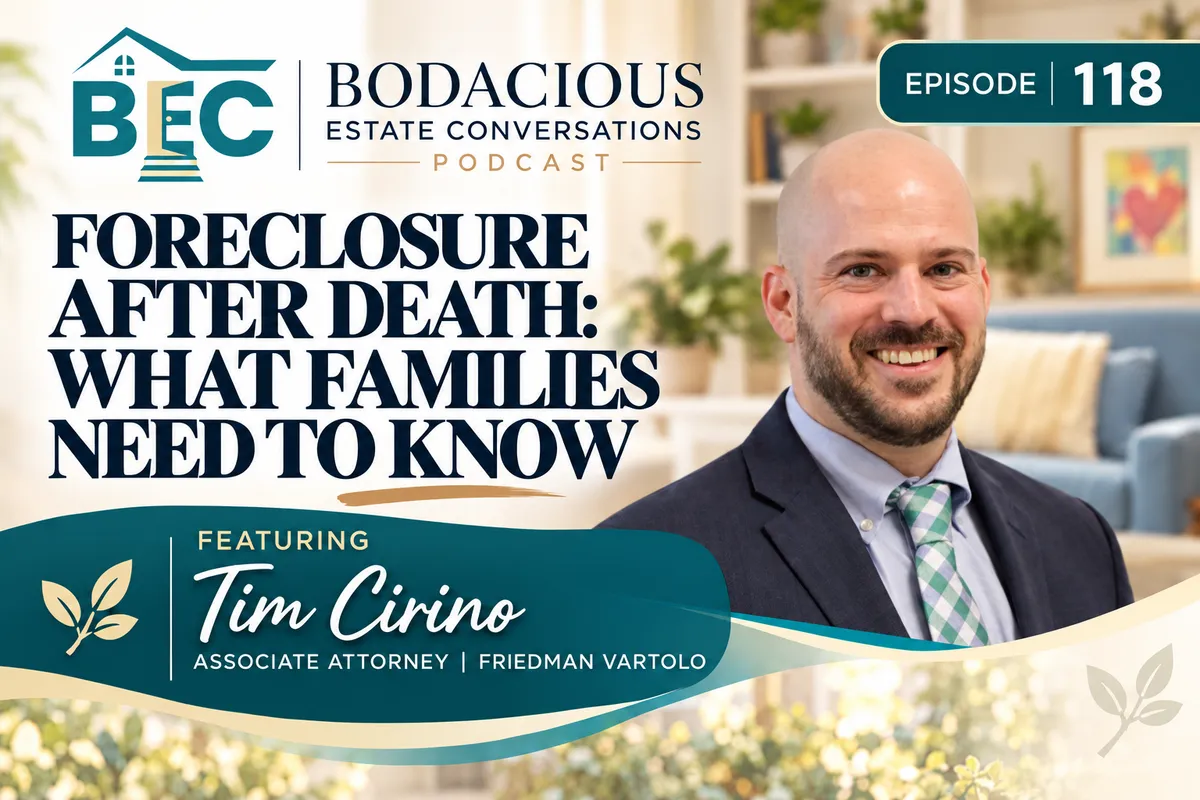
Foreclosure After a Death: What Pennsylvania Families and Executors Need to Know
Bodacious Estate Conversations | Episode 118
Featuring Tim Cirini, Associate Attorney at Friedman Vartolo
When someone dies with a mortgage on their home, the family or personal representative may eventually receive delinquency notices or foreclosure paperwork. The situation can feel urgent and confusing, especially when heirs are still deciding what to do with the property.
In this episode of Bodacious Estate Conversations, host Kasey King speaks with Tim Cirino, Associate Attorney at Friedman Vartolo, about how foreclosure may affect an estate in Pennsylvania. They discuss notices, possible timelines, communication with the lender, options for an underwater property, and what may happen when someone is living in the home.
This conversation focuses on general information about Pennsylvania foreclosure matters. The right steps depend on the property, loan, estate, and circumstances. Consult an attorney about a specific situation.
What a foreclosure notice means
A foreclosure notice is a reason to find out what stage the matter is in and what deadlines apply. In the interview, Cirino explains that the lender or its representatives may not know immediately that a borrower has died. If no estate has been opened, they may have limited information about the personal representative or heirs.
Notice requirements vary by the loan and circumstances. Pennsylvania’s Act 6 includes a notice of intention to foreclose at least 30 days before certain actions involving covered residential mortgage obligations. Whether that requirement applies in a particular case should be confirmed with an attorney.
If you receive a notice, keep the paperwork and note any dates or response deadlines. The estate’s representative can contact the lender or the attorney handling the foreclosure to explain the situation and ask what options may be available.
How long can the process take?
There is no single timeline for every foreclosure. Cirino described an uncontested Pennsylvania case as often taking about 12 to 15 months from notices through completion of the sale and recording of a deed. He also noted that timelines vary by county and by what happens in the case; some matters may move more quickly.
Those estimates are based on the guest’s experience and are not a prediction for any particular property. Ask the attorney handling the case about its current status, next steps, and deadlines.
Communicate your plans early
Cirino emphasized that communication can help everyone understand what the estate intends to do. If the personal representative or heirs are considering keeping the home, selling it, or walking away, they can communicate that position to the lender or the attorney handling the case.
If a sale is being pursued, the lender may consider postponing a scheduled sheriff sale, but that decision is not automatic. A short sale—where the sale proceeds would not cover the full mortgage debt—also requires lender review and approval. Cirino advised checking with the lender before investing significant effort in that path.
Options for a property the estate does not want to keep
The best option depends on the property’s value, debts, the estate’s circumstances, and the lender’s requirements. In the interview, Cirino discussed several possibilities to explore with qualified legal counsel:
Market the property for sale. A planned sale may give the lender a reason to consider postponing a scheduled sale, though approval is not guaranteed.
Ask about a short sale. The lender may or may not agree to accept less than the full debt.
Explore a deed in lieu of foreclosure. The lender may consider accepting the property instead of continuing the foreclosure process. The effect on other liens or interests should be reviewed carefully.
Ask an attorney whether bankruptcy or another legal option makes sense.
After getting legal advice, decide whether to let the foreclosure proceed. If the heirs do not want the property and it has no benefit to the estate, that may be one option to discuss.
These are topics to discuss with an attorney and the lender. They are not a checklist of steps that will work in every case.
Being named in a foreclosure action
The interview also addressed a common concern: an heir or other person with an interest in the property may be named in a foreclosure action so that the property interests can be addressed. Cirino explained that being named does not necessarily mean that the person is being pursued for personal liability. The legal effect depends on the case, so anyone named in an action should have an attorney review the papers rather than assume what it means.
What if someone is living in the home?
A tenant, family member, or other occupant can add another layer to the situation. Cirino explained that, in Pennsylvania, removing an occupant after a foreclosure sale may involve an ejectment action. He described those cases as taking several months in his experience, but the process and timing depend on the facts.
He also mentioned a possible “cash for keys” arrangement with an occupant. Such an arrangement can carry risks. Get legal advice and use a written agreement that addresses when the occupant will leave and when any payment will be made.
Start with the paperwork and a conversation
A foreclosure notice does not tell you by itself which option is best for an estate. The key first steps discussed in this episode are to understand the status of the case, communicate with the lender or its attorney, and consult an attorney who can review the specific documents and circumstances.
Listen to Episode 118 of Bodacious Estate Conversations for the full discussion with Tim Cirino.
Need help planning next steps for an estate property? Start a Conversation With Guided Home Prep