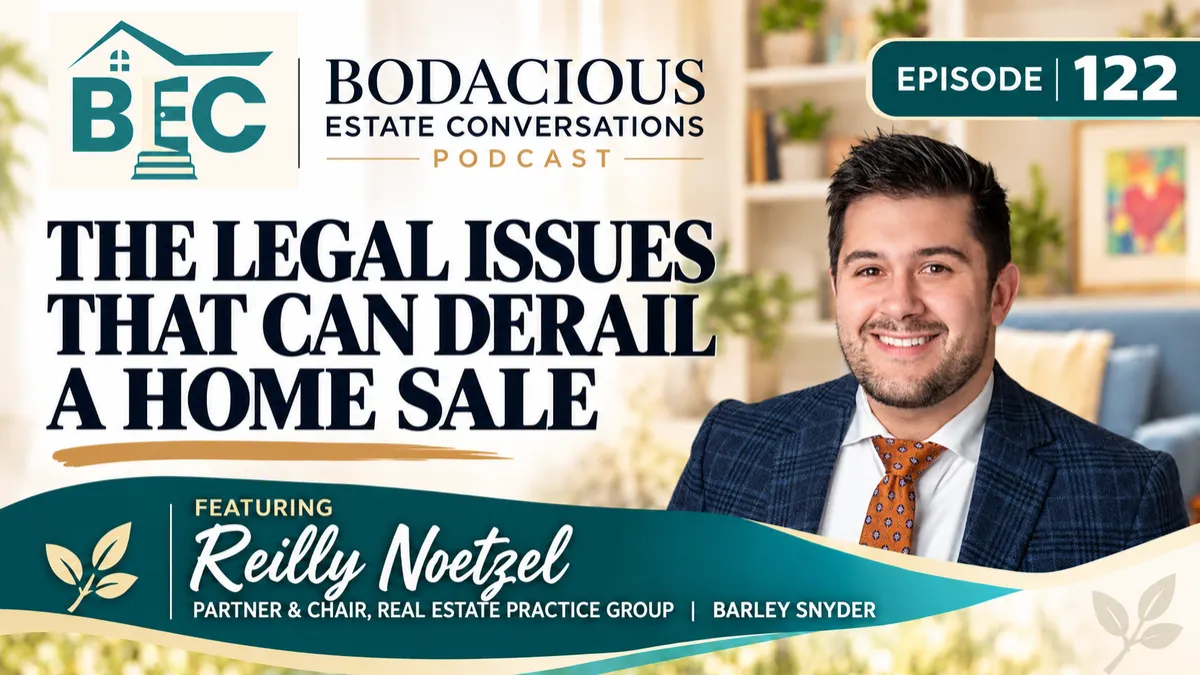
Legal Issues That Can Derail a Home Sale: Inherited Homes, HOAs and More
Bodacious Estate Conversations | Episode 122
Featuring Reilly Noetzel, Partner and Chair of the Real Estate Practice Group at Barley Snyder
Selling a home can involve more than preparing a property, accepting an offer and getting to closing. Estate paperwork, property records, association requirements and buyer due diligence can all affect the transaction—and some issues may not surface until a deal is underway.
In Episode 122 of Bodacious Estate Conversations, Reilly Noetzel of Barley Snyder joins the conversation to discuss legal issues that can complicate a home sale, especially when a seller is handling an inherited property or is not familiar with the home’s history.
Start with a team and a clear plan
Noetzel recommends assembling the right professionals early. An attorney can help review contracts and related documents; a real estate professional can advise on pricing and the market; and an accountant can help identify potential tax considerations.
A plan for the property matters, too. Sellers may need time to remove personal belongings, make cosmetic updates, gather records or prepare the home for showings. Understanding the property’s condition and likely buyer can help shape the marketing plan and timeline.
Executors and other representatives may not know the details that an owner would know. Before listing, it can help to find out whether the property is part of a condominium or homeowners association, how it is zoned, and whether it uses public or private water, sewer or septic systems.
Identify records and disclose known concerns
The discussion highlights the value of gathering property information early. Records about utilities, permits, improvements and septic systems may help sellers and their professional team anticipate questions from buyers, title companies or municipalities.
Noetzel notes that estate representatives may be exempt from completing a seller disclosure form in the situations discussed. He also recommends that sellers consider disclosing known material issues in writing. A known concern that comes to light late in the process can lead to disputes, delays or additional costs.
The episode also covers septic and well systems. In some transactions, missing records, inspection requirements or questions about permits can require additional investigation. The specific responsibilities depend on the property and the agreement, so sellers should discuss those details with their own professionals.
Understand due diligence and negotiate issues in writing
A buyer’s inspection or other due diligence may uncover a concern after the agreement is signed. Depending on the contract, the parties may negotiate an amendment that addresses the issue—for example, through a price change, agreed repairs, shared costs or a revised settlement timeline. The available options depend on the terms of the agreement.
The guest also describes how a disagreement over an earnest money deposit can continue after a buyer terminates an agreement. If the parties dispute who is entitled to the funds, the escrow holder may not be able to release them until the dispute is resolved.
When repair funds are held in escrow from a seller’s proceeds, Noetzel advises making the agreement clear about the work, responsibilities and timeline. The terms should reflect what the parties can realistically complete.
Request HOA and condominium documents early
For homes in a condo or HOA community, a resale certificate can provide information about assessments, possible violations and association requirements. Obtaining it may take time and involve a fee, so the episode recommends identifying the association’s contact and requesting the documents well before closing.
The conversation gives examples of association issues that can delay a sale, including unapproved improvements and requirements connected to a buyer’s proposed ownership structure. The documents may also surface past-due assessments or items the association says need attention. Reviewing these matters early gives the parties more time to understand and address them.
Keep insurance and utilities in place through closing
The seller’s responsibilities may continue after a contract is signed. The episode discusses keeping appropriate insurance coverage in place through closing and maintaining the property and utilities as required by the agreement.
Turning off utilities too soon can affect inspections or an appraisal. If a property’s systems cannot be checked or the home is considered uninhabitable for lending purposes, the parties may need to restore service and arrange another visit, adding time to the process.
Check zoning and intended use
Zoning may matter when a buyer plans to use a property differently from its current residential use—for example, for a short-term rental or a home-based business. Proposed additions, outbuildings or other changes may also involve setbacks, runoff rules or applications for zoning relief.
The episode encourages buyers to investigate whether their intended use is allowed, and sellers to understand the buyer’s plans when evaluating an offer. Noetzel also discusses Clean and Green enrollment as a consideration for certain properties in Pennsylvania; a change in use can have tax implications that the parties should review with qualified professionals.
Look beyond the offer price
The highest offer may not be the only factor worth considering. Inspection rights, contingencies, financing and timing can affect the likelihood and complexity of reaching closing. If the proposed timeline does not work for a seller, the parties may be able to negotiate different timing or a post-closing occupancy arrangement, with terms documented in writing.
Noetzel’s central advice is to understand the property, gather information early and learn what the buyer intends to do with it. A knowledgeable team can help identify questions before they become last-minute obstacles.
Listen to Episode 122:
This episode shares general information from a conversation with a real estate attorney. It is not legal, tax or real estate advice for a specific transaction. Requirements can vary by property, contract and jurisdiction; consult qualified professionals about your situation.