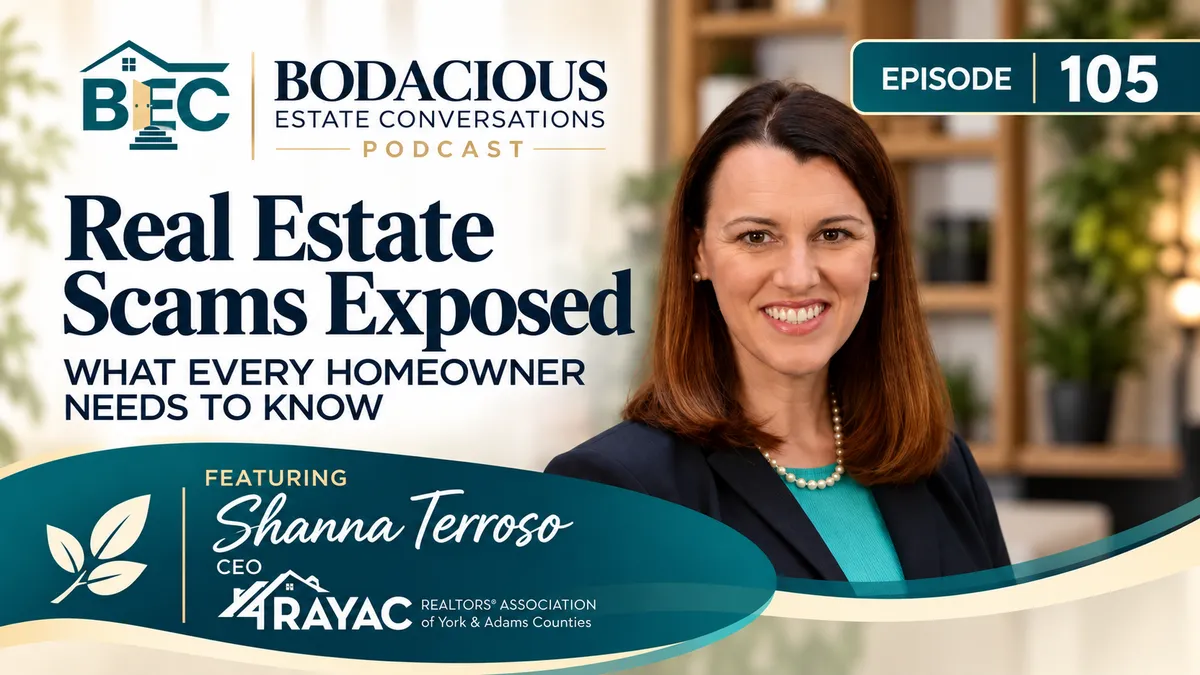
Real Estate Scams Exposed: How to Protect Your Home and Inherited Property
Bodacious Estate Conversations | Episode 105
Featuring Shanna Terroso, CEO of the Realtors Association of York & Adams Counties (RAYAC)
Imagine discovering that someone has listed your property for sale without your permission. Or finding out that a deceased family member's identity has been used to transfer ownership of a home.
These situations sound unbelievable, but real estate fraud is a growing concern for homeowners, buyers, and families managing inherited properties.
In Episode 105 of Bodacious Estate Conversations, host Kasey King sits down with Shanna Terroso, CEO of the Realtors Association of York & Adams Counties (RAYAC), to discuss real estate scams affecting Pennsylvania homeowners.
Shanna shares examples of fraudulent property sales, explains why vacant land and estate properties can be vulnerable, and introduces a free tool that can help families detect suspicious activity involving their property records.
1. Vacant Land Scams: When Someone Pretends to Own Your Property
One of the most concerning scams Shanna discusses involves vacant land.
Fraudsters identify properties and impersonate the legitimate owners, sometimes using forged identification documents and convincing personal information.
They then contact real estate agents and attempt to list the land for sale.
If the fraud succeeds, an unsuspecting buyer may pay for property that the supposed seller never had the authority to transfer.
Shanna explains that scammers can be especially interested in vacant parcels owned by people who live out of state or rarely visit the property.
Warning signs may include:
A supposed seller who refuses to meet in person or appear on video
Identification or contact details that cannot be independently verified
Unusual urgency to complete the transaction
Inconsistent ownership information
Requests to handle everything remotely without reasonable verification
Remote transactions can be legitimate, so no single warning sign proves fraud. However, unusual circumstances warrant additional verification.
2. Deceased Homeowners Can Become Targets
For families handling an estate, this part of the conversation is particularly important.
Shanna describes a situation in which scammers allegedly impersonated a deceased property owner and attempted to transfer real estate after that person's death.
The fraudulent recording was discovered quickly, allowing those involved to take action.
Without early detection, an executor or family member might not discover a suspicious transfer until much later, potentially when preparing to sell the property.
If you're responsible for an inherited home, it is worth checking the property's recorded ownership information and asking an estate attorney about appropriate safeguards.
3. A Free Tool Every Property Owner Should Know About
One of Shanna's most valuable recommendations is to enroll in the free recording notification services offered by the York and Adams County Recorder of Deeds offices.
These services can notify subscribers when certain documents associated with a monitored property or name are recorded.
Depending on the county's system and enrollment options, notifications may help alert you to activity involving deeds, mortgages, or other recorded instruments.
Shanna emphasizes that family members can also use these services to help monitor a parent's property.
Important: A recording notification does not prevent fraud, prove that a document is fraudulent, or replace title insurance. Its purpose is to help you discover potentially suspicious activity sooner.
If you receive an unexpected alert, promptly contact the Recorder of Deeds office and an appropriate legal professional to determine what happened.
To find the service, visit the official York County or Adams County government website and look for the Recorder of Deeds recording notification program.
4. Can Someone Take Out a Loan Against Your Property Without You Knowing?
Another concern discussed in the episode is fraudulent financing involving property that belongs to someone else.
Shanna explains why monitoring recorded documents can be useful: mortgages and certain other instruments are recorded in public land records.
An alert may help you discover an unexpected filing involving your property.
However, recording alerts are only one layer of protection. Homeowners should also safeguard personal information, monitor financial accounts, and seek professional assistance if they suspect identity theft or property fraud.
5. Fake Rental Listings: A Scam That Can Cost Renters Thousands
Not every real estate scam involves stealing ownership.
Shanna also describes a scheme in which criminals copy photographs and information from legitimate homes listed for sale, then advertise those properties as rentals on websites such as Facebook Marketplace.
Prospective tenants believe they have found an affordable rental and send deposits or advance rent.
The scammer disappears, leaving the renter without a home or the money they paid.
In some cases, victims have arrived at the property expecting to move in, only to discover that it was never available for rent.
Before sending money for a rental:
Verify who owns or manages the property.
Search the address on established real estate websites.
Contact the verified listing brokerage or property manager independently.
Be cautious about requests for payment before proper verification.
Do not rely solely on contact information supplied in an online advertisement.
A property can legitimately be marketed for sale and rent simultaneously, but conflicting advertisements should prompt additional questions.
6. Investment Scams Targeting Real Estate Professionals
Shanna also warns about fraudsters posing as prospective real estate clients who gradually introduce cryptocurrency or other investment opportunities.
The scam begins with relationship-building and promises of unusually high returns.
Victims may initially see apparent gains on a fraudulent investment platform, encouraging them to deposit more money.
Eventually, the fraudster takes the funds or prevents withdrawals.
Although this example focuses on real estate professionals, the underlying warning applies to everyone: be suspicious of unsolicited investment opportunities promising unusually high returns, particularly when someone you recently met is encouraging you to invest.
7. Why Professional Verification Matters
Throughout the interview, Shanna emphasizes the importance of confirming that people involved in real estate transactions are who they claim to be.
She discusses tools such as FOREWARN, which RAYAC provides as a member benefit to assist real estate professionals with identity and safety checks.
Title companies and settlement professionals may also use additional verification procedures when circumstances warrant them.
No single tool eliminates fraud, but independent identity checks, professional oversight, and careful attention to inconsistencies can reduce exposure.
8. Protecting Aging Parents and Family Property
For adult children helping aging parents, Shanna's recommendations are especially practical.
Families may want to:
Discuss suspicious calls, emails, and property-related solicitations.
Help parents enroll in available recording notification services.
Verify unexpected documents or requests involving the family home.
Keep estate planning and property records organized.
Contact qualified professionals promptly when something appears wrong.
The goal isn't to create fear. It's to make sure families have enough information to recognize potential problems and respond.
About Shanna Terroso
Shanna Terroso has spent more than two decades working with the Realtors Association of York & Adams Counties.
As CEO, she helps support the organization's real estate professionals and its work on housing, community development, and consumer awareness.
During the episode, Shanna also shares her background, her connection to York County, and RAYAC's community outreach efforts to support individuals experiencing housing insecurity.
Watch or Listen to Episode 105
Real Estate Scams Exposed: What Every Homeowner Needs to Know
Need Help Managing an Inherited Property?
Protecting a home is only one part of managing an estate.
At Guided Home Prep, we help homeowners, executors, and families navigate the practical responsibilities involved in maintaining, preparing, and selling unwanted real estate throughout South Central Pennsylvania.
Whether you're handling an inherited home, coordinating repairs, or simply trying to understand your options, we're here to help you develop a clear plan.
No pressure. Just clarity and a plan.
Start a Conversation With Guided Home Prep
Disclaimer: This article is for general educational purposes and does not constitute legal, financial, or title insurance advice. Fraud methods and available protection services may change. Consult qualified professionals regarding specific property concerns.