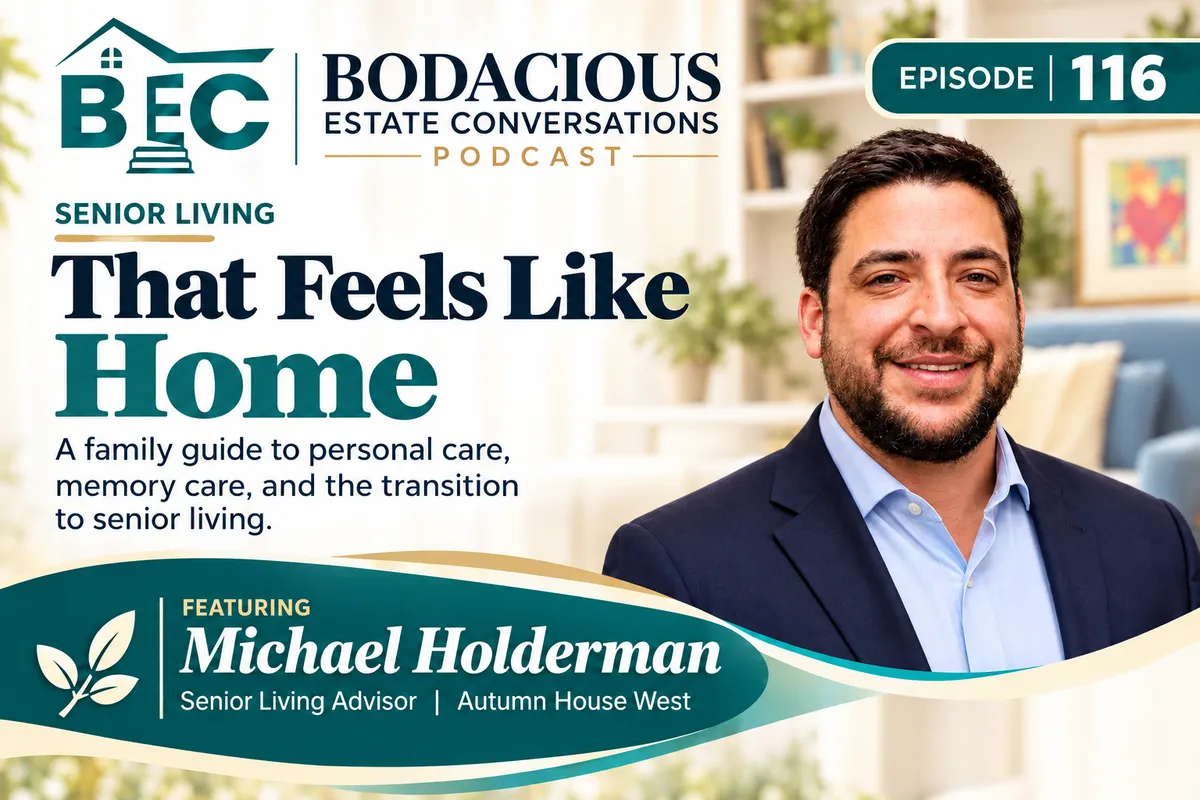
Senior Living That Feels Like Home: What Families Should Know
Bodacious Estate Conversations | Episode 116
Featuring Michael Holderman, Senior Living Advisor | Autumn House West
Considering senior living for a parent or loved one can bring up difficult questions. Families may wonder when extra support is needed, what daily life in a community is like, and whether a move means giving up independence.
In Episode 116 of Bodacious Estate Conversations, host Kasey King speaks with Michael Holderman, Senior Living Advisor at Autumn House West, about personal care, memory care, family concerns, and the adjustment to community life. The conversation offers families questions to consider as they explore care options.
What personal care can include
The phrase “senior living” can mean different things at different communities. Holderman describes Autumn House as offering independent living, personal care, and memory care. He explains that personal care may help with needs such as cooking, cleaning, medication management, getting to appointments, dressing, or toileting. The level of support depends on the individual.
Living arrangements can also differ. Holderman describes private rooms with different layouts and bathroom arrangements, including suites. Families should ask each community what housing options and services are available, what is included in the cost, and whether additional care needs affect pricing.
A tour can help replace assumptions with specific information. Ask to see the available room types and common areas, and talk through what a typical day looks like. If your loved one is comfortable, include them in the visit and invite them to share what matters most to them.
Signs a loved one may need more support
In the episode, Holderman identifies medication management and falls as concerns families commonly raise. A change in medication routines, repeated falls, or difficulty keeping up with daily tasks may be reasons to pause and look more closely at what support is needed.
These concerns do not point to one automatic solution. Families can start by keeping track of what they have noticed, discussing health or safety concerns with the person’s healthcare provider, and asking communities what kinds of support they offer. A conversation can focus on what would help the person remain safe and comfortable while preserving as much choice as possible.
Community life and independence
A common worry is that moving to a senior living community means losing control over everyday life. Holderman describes a different picture: residents may participate in activities, socialize, and keep some of their routines and freedoms, while staff help with the things that have become difficult.
Activities at the community he describes include live music, shopping or bus trips, bingo, happy hours, and visits from animals and school groups. Residents may have opportunities to express preferences, including voting on outings. The specific activities and level of choice will vary by community, so ask what is offered and how residents help shape the schedule.
For some people, being around others can also make it easier to reconnect socially. Holderman says families may be surprised when a loved one begins spending more time outside their room, making friends, or joining activities after moving in. That experience is not guaranteed, but it is a useful question to raise during a tour: What support is available to help a new resident feel welcome and find activities that interest them?
Give the adjustment time
A move can be emotional for both the resident and family. Holderman describes the first month as a period when people may still be wondering whether they made the right choice. In his experience, residents may become more comfortable as they learn the routine and start connecting with others.
Families can support the transition by staying involved, asking how their loved one is adjusting, and sharing useful background with staff. Rather than expecting an immediate change, ask the community how it helps new residents settle in and how families can stay in communication.
For families who have been providing daily care, a move may also change the relationship. As Holderman describes it, relatives may have more time to visit as a son, daughter, or spouse instead of focusing every visit on chores or care tasks. Each family’s experience will be different, but it can help to talk openly about what everyone hopes will change.
Memory care, dignity, and routine
Holderman describes memory care at Autumn House as a secured setting with more hands-on support. He emphasizes learning about a resident’s history and treating that person with dignity, especially as their needs and communication change.
When touring a memory care community, ask how staff learn about residents’ preferences and life stories, what routines look like, how the setting supports safety, and how families can share information. Also ask how staff communicate with residents who need more help expressing their needs. The details matter because communities and care approaches vary.
Ask clear questions about costs and care
The episode also touches on private payment, long-term care insurance, and possible veterans’ benefits. Coverage and eligibility can depend on the person’s circumstances, the policy, and current program rules. Confirm details directly with the community, insurer, or an appropriate benefits representative before making financial decisions.
Ask for a written explanation of what the quoted price includes, how care needs may affect costs, and what services might be billed separately. Comparing the same information across communities can help families make a more informed decision.
About Michael Holderman
Michael Holderman is a Senior Living Advisor at Autumn House West. In this episode, he shares his perspective on personal care, memory care, family concerns, and the transition into community living.
Watch or listen to Episode 116
If your family is sorting through a home transition while planning next steps, start a conversation with Guided Home Prep. No pressure. Just clarity and a plan.
This article is for general educational purposes and is not medical, legal, insurance, tax, or financial advice. Confirm care needs with qualified healthcare professionals and verify payment, coverage, and benefit questions with the relevant provider or agency.